
This is not an official website of Corbett national park. It is registered under the private travel agency name Seven Safar Tour & Travels. We organize Hotel, Safari and Tour Package bookings in Corbett national park.
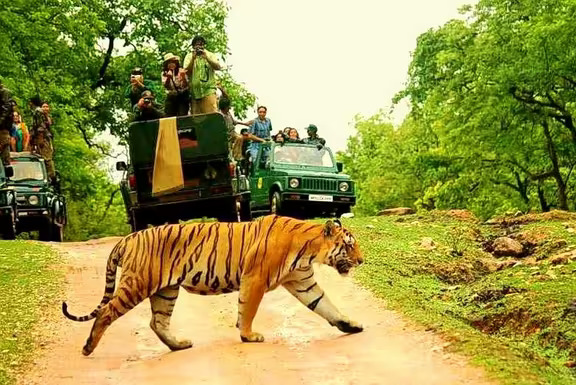
Jim Corbett National Park is the first tiger reserve of India. This is an incredible forest holding many species of wildlife in a safe location. It is situated in the northern state of Uttarakhand, India, and was established to protect tigers and other wildlife many years ago. Before the creation of this park, several species of animals were being hunted by man, leading to a drastic reduction in their numbers. As a result, the Government established a national park to conserve the animals and the forest. Therefore, today, visitors from all over India and overseas come to visit the many sites of natural beauty and view the many species of wildlife within Corbett National Park.
History of Jim Corbett National Park
A long time ago, in India, forests were never protected. Tigers were hunted for sport and these numbers were extremely high. Tiger populations were declining at an alarming rate and this created fear among people because of their significant role as a predator in the ecosystem. In 1936, Jim Corbett National Park was established to protect these species. Originally, it was not named after Jim Corbett, but was later changed to honor him because he was an advocate for animal conservation and the protection of forests, and he encouraged people to appreciate the importance of both animals and forests. Because of his efforts, Jim Corbett National Park serves as a haven for wildlife. Therefore, Jim Corbett National Park is considered the first tiger reserve in the country and is where tiger populations were first afforded legal protection in India. In 1973, Project Tiger was initiated by the Government of India to protect India's tiger population. Jim Corbett National Park was designated as the first Project Tiger site, giving it a higher profile within India compared to newer tiger reserves that followed.
Animals and Nature in Jim Corbett Wildlife Sanctuary
The park has large trees, lush green grasslands, flowing rivers, and rolling hills. The Ramganga River runs through Jim Corbett National Park and provides drinking water for wildlife, including lots of birds and mammals. When you take the park's safari tour, you have an excellent chance of viewing a variety of animals. People come from all over the world to see the park's most famous resident: the tiger. Other animals you will likely see include the elephant, deer, leopard, wild boar, and monkey. In addition, the park is home to numerous brightly colored birds that fly above and build their nests in its trees. The park has many areas (called zones) that differ greatly in terms of their aesthetic appeal. Some zones are made up of dense forests, while others consist of large open grasslands. When you go on safari, you will be in an open-air jeep that has a driver and a guide who helps you identify the various species of wildlife as well as explain different aspects of the forest. Each safari lasts anywhere from 2 to 4 hours. Wildlife viewing is best during the early morning and late evening due to the cooler temperatures and heightened activity by wildlife in search of food and water. The park does not just cover the tiger, but serves a huge and vital role in conserving several different species and plants.
Why Corbett National Park Is Called the Oldest Tiger Reserve
India's first national park that protects tigers was Jim Corbett Tiger Reserve, making it the oldest tiger reserve in the country. Jim Corbett was established before the country's independence. Thereafter, it became the first national park to be included in Project Tiger. Many other tiger reserves have subsequently been created in India, including Ranthambore National Park and Bandhavgarh National Park, but Jim Corbett National Park marks the beginning of the conservation of tigers in India. Subsequently, because it has the longest history, Jim Corbett Tiger Reserve has also provided numerous lessons for the protection of wildlife in India. The national park employs numerous forest officers and guides who work tirelessly to protect wildlife; hunting is not permitted. A limit on the number of trees cut down is enforced within the boundaries of the national park; each day, only a limited number of safari vehicles are permitted to enter the park; and all of these measures have created a peaceful environment for wildlife. All of the conservation efforts that have been implemented in Jim Corbett National Park have yielded positive results through the increase in the tiger population in the national park over the years.
Conclusion
Jim Corbett National Park proudly represents India as its first and oldest tiger conservation area. It was established to conserve the tiger population while preserving the forests and their ecosystems. This means many animals have places to live because of Jim Corbett. Visitors to Jim Corbett have the opportunity to appreciate nature and learn about the role of nature in our lives. Jim Corbett teaches us that it is our responsibility to protect animals and trees. In the end, if we continue to take care of nature, then it will take care of us.


 (1).png)
.png)